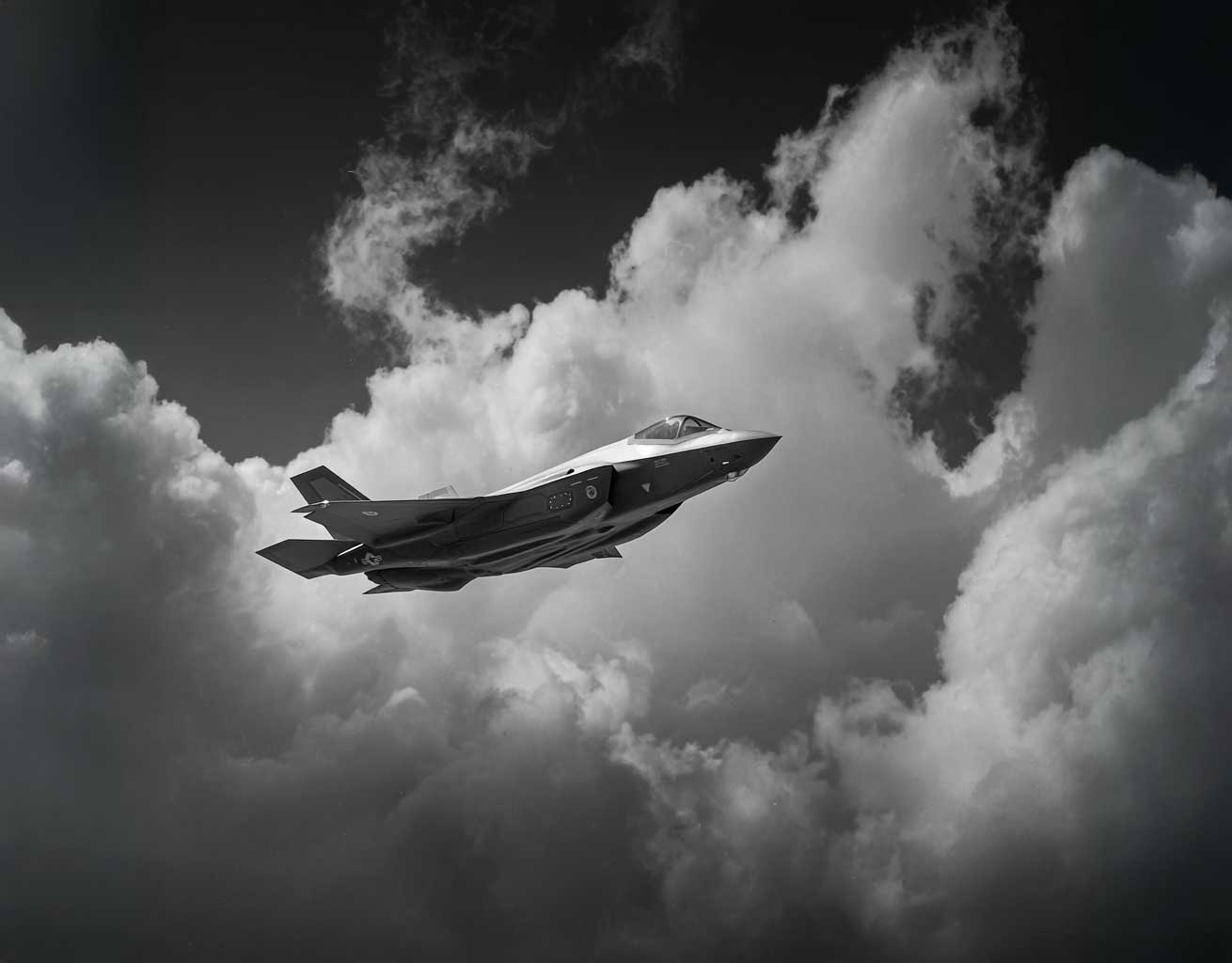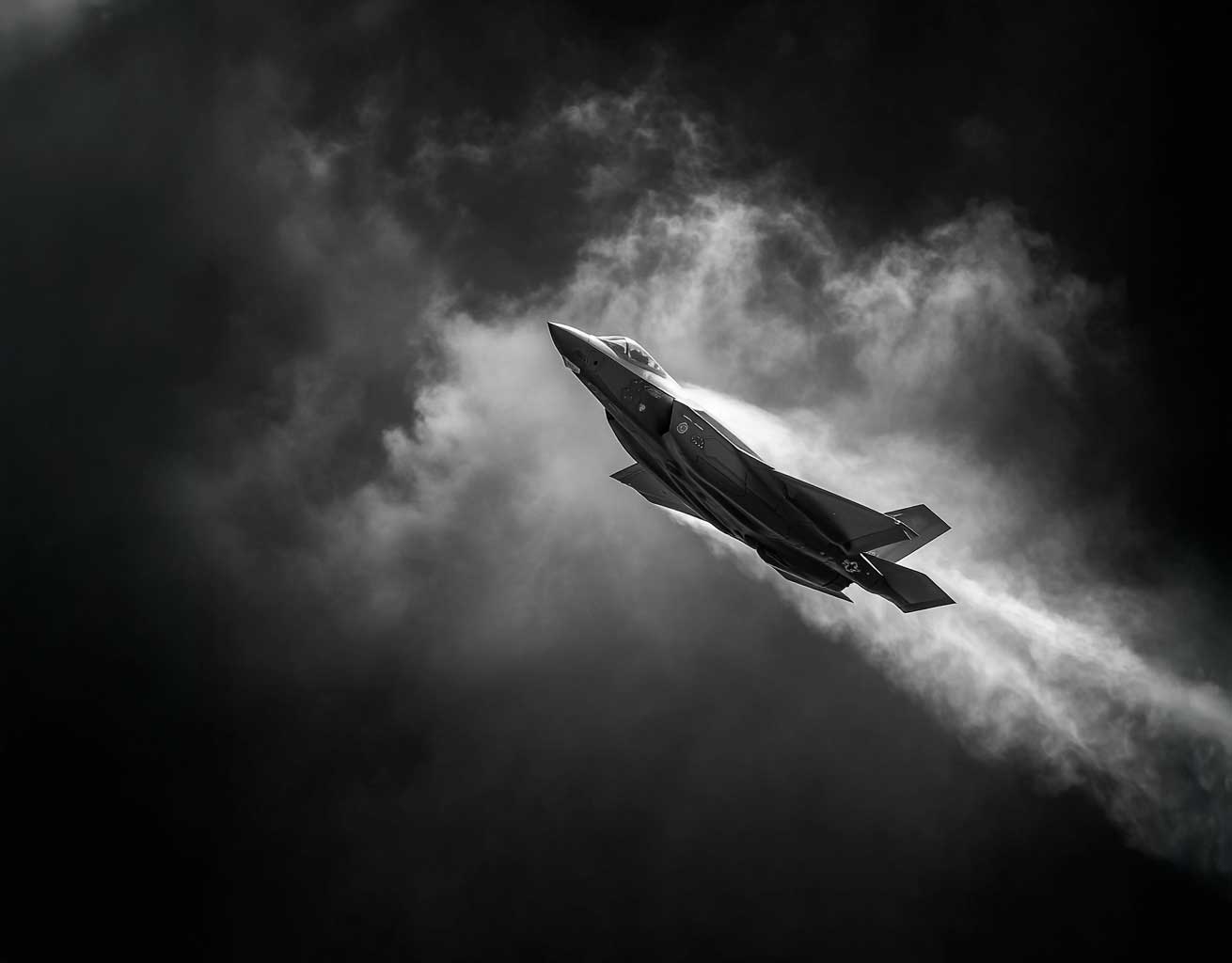
The US Air Force said Monday its fleet of F-22 fighter jets will be allowed back in the air after officials grounded the planes over concerns about the aircraft’s oxygen system. The F-22 Raptors, the most advanced combat aircraft in the world, were barred from flying for four months, a highly unusual move that reflected serious worries over safety.
“We now have enough insight from recent studies and investigations that a return to flight is prudent and appropriate,” Air Force chief of staff General Norton Schwartz said in a statement. “We’re managing the risks with our aircrews, and we’re continuing to study the F-22’s oxygen systems and collect data to improve its performance”. Commanders ordered a “stand-down” of the Raptor fleet on May 3 after 12 separate incidents over a three-year period in which pilots reported “hypoxia-like symptoms,” the Air Force release said. In one case, an F-22 reportedly scraped tree tops before landing and the pilot could not remember the incident, indicating a possible lack of oxygen.
Analysts say the Air Force has struggled to pin down the source of the problem with the Raptors despite elaborate safety investigations. The fleet will undergo “an extensive inspection of the life support systems before returning to flight, with follow-on daily inspections,” the Air Force said. In addition, pilots will use additional protective equipment and undergo physiological tests, it said. Under the decision, pilots will be allowed to fly at 50,000 feet (15,200 meters). Between January and April, the Raptors were not permitted to venture beyond 25,000 feet.
The Air Force has more than 160 F-22 Raptors in its fleet and plans to build a total of 187. The radar-evading aircraft, designed primarily for dogfights against rival fighter jets, have not been used in the NATO-led air campaign in Libya or the wars in Afghanistan and Iraq.
We were in Cuba last week – mostly to sip daiquiris and cuba libre – but it also concurred with the 50th anniversary of the failure of the bay of pigs invasion, celebrated by half a million Cubans. And for the occasion, they displayed their latest armaments. And we were stunned to see they were still flying the Mig 15. 50 years after the biggest crisis between the US and Cuba, the poor old neighbour is still flying antics, and that demonstrated to us the state in which Cuba is in.
So, as a tribute to hopefully, changes in their country to come soon, here is a short story of the Fagot – yes, the Fagot, or the Midget, as they were codenamed by NATO… Despite the name, the Mig 15 is one of the best successes of the Soviet Union with more than 50 countries buying the jet fighter. Over 12,000 were built, making it the most widely produced jet fighter ever made.
mig 15
The MiG-15 was one of the first successful swept-wing jet fighters, and it achieved fame in the skies over Korea, where early in the war, it outclassed all straight-winged enemy fighters in daylight. The MiG-15 also served as the starting point for development of the more advanced MiG-17 which was still an effective threat to supersonic American fighters over North Vietnam in the 1960s. The MiG-15 is often mentioned along with the North American F-86 Sabre in lists of the best fighter aircraft of the Korean War and in comparison with fighters of other eras.
Mig 15
So what is the secret of the Mig 15? Great design, with swept-wings ideal for speed. And power. It was suggested to Stalin the USSR buy advanced jet engines from the British. Stalin is said to have replied, “What fool will sell us his secrets?” Well Rolls Royce did… The performance of the jet fighter were very good at the times. Max speed of 650mph, cruise speed at 520mph and a range of over 1200km. For a plane built in 1955, this was good.
There are still a few Mig 15 around the world, as so many were built. And if you want to see them in action, without having to travel to Cuba, check out Mig Fury Fighters. This group of passionate pilots based in Idaho are flying the Mig in formation and displaying at many airshows around the US. Check their website for additional information.
If someone asks you if you want to fly in his “Habu”, you have to say YES!!! Because “Habu” is the nickname of the Lockheed SR-71. The Blackbird is not a jet fighter but a reconnaissance aircraft, and we wanted to pay tribute to such an amazing plane. If you think it was introduced in 1966, and that the basic evasive action was simply to fly high and fast, the SR-71 is truly incredible. First the plane was designed by Clarence “Kelly” Johnson, master of skunk works at Lockheed, so it had to be good.
The SR-71 was developed to push the limits. It would fly at 80,000ft at Mach 3, was stealthy, could fly 3,000 miles (5400Km) and be refueled in air. It had GPS to make sure the pilot knew where he was precisely and especially through which airspaces he was flying into. The pilot had a full kit with oxygen so he could basically survive at such high altitude. What else, it benefited from developments in fuel – JP-7 fuel – as well as air frame textures to both make it stealthy but also heat resistant as the jet would be super hot at Mach 3.
But the Lockheed SR-71 Blackbird was mostly a big slap in the face of all other countries in the world, and especially the Soviet Block. The Blackbird was designed for one thing only: to fly over countries without their permission. The pilot would not really care about getting caught as he would be flying too high. A missile launch? Well, he would simply accelerate… Truly amazing. The SR-71 was introduced in service in 1966, and from then on the plane averaged 1 sortie a week over hostile territory. By 1972, it was flying every day.
The Lockheed SR-71 Blackbird was retired in 1998, which is quite a good career for such a plane. During its lifetime, it held various world records, such as the absolute high altitude world record at 85,069ft. It flew from New York to London in just 1h50mn (Concorde required 3h), Los Angeles to Washington in 64mn. Being phased out, there are many talks about the replacement which is often seen as the Aurora. But most certainly, the successors of the SR-71 are all unmanned aircrafts which will get rid of their weakest links: the pilots.
We live in a very hectic world these days… Operations in Libya have started a few days ago, and as fighter pilots, we know the stress the pilots involved are actually going through. So all our thoughts are with you. Take care. Accomplish the mission. And be careful. A few of us can remember what it is like to fly in a combat zone. One of our friends was shot by a simple rifle, through the canopy and the bullet crashed into his helmet. Fortunately our friend was unhurt. But he kept the helmet as a souvenir. Even in a jet fighter, the pilot is at high risk. So to all the fighter pilots involved… take care.
What happens when great pilots take you on board for an incredible jet fighter ride ? Well check the video. The fighter jet is a Fouga Magister, a French jet trainer that has qualified thousands of French pilots. The plane is also very well known and used in the USA and other parts of Europe. As a twin engine jet, it is very safe to fly and makes an incredible noise. And the bonus is that the Fouga Magister is a very easy aircraft to fly. You would fly this jet fighter as a Cessna 182, the power on top. It is so good that this French team has developed a program for pilots who want to try do aerobatics themselves. These pilots are some of the best in France, and they will make your day a great experience. So if you are looking for adrenaline while in France, check them out.
See this video of what a jet fighter ride with them looks like.
This jet fighter flight is operated by Tematis. Check their website for additional information.
They are doing a Top Gun 2 ! Great news. And what a plane. The Tomcat is forever associated with Tom Cruise playing Maverick. But the real hero of the movie is the Grumman F-14 Tomcat. This jet fighter badly started its career and few people were betting on a future for this aircraft. The project was developed in the late 1960s and the first jet took off on December 21, 1970. The first deliveries occurred in 1972 and very soon pilots started complaining. The jet fighter was vibrating way too much, especially when flaps were deployed, which does not make the task of landing on an aircraft carrier very easy… Structural damage between the engines and the tail was also a frequent occurrence. These problems almost pushed Grumman to bankruptcy.
The Shah of Iran saved Grumman from bankruptcy by ordering 80 of the Tomcats. Let’s call it irony of history… But soon, the Islamic Revolution took place and all deliveries were blocked. These Iranian planes never took off… They success factor of the F-14 Tomcat is its amazing offensive capacity, and especially its armament system. For the first time, a jet fighter was able to identify and lock a flying target at a 300km distance. The Tomcat could lock a missile at 120km and the weapon system could follow 24 targets and attack simultaneously 6 flying targets at various distances and altitudes… Talk about a deadly weapon!
The Tomcat went first into battle in 1981 in the Mediterranean when pilots shot down two Libyans Su-22 and then in 1989 when it shot down 2 Libyans Mig-23. The F-14 Tomcat was also extensively used during the first Gulf War, in the Balkans as well as in Afghanistan. The US Navy started decommissioning these awesome jet fighters in 2004 and the last ones have been replaced in 2006 by the F/A-18F Super Hornet. What is great about this plane is not that its engineering made a super jet fighter or that Tom Cruise gave it immortality, but that like many jet fighters, it started badly to become a super bad ass! Unfortunately we haven’t been able to find a F-14 Tomcat to fly for the average Joe, but I am sure that we will be able to fly the Tomcat in the near future.
Ever wanted to be Tom Cruise in Top Gun ? Flying a jet fighter is an experience on its own, but Mach One Aviation has taken it up a notch by allowing people to dog fight! Yes, in a jet fighter. The L39 Albatros is maneuverable and easy to fly, and is one of the best jets to enjoy this experience. As you and your friend take to the air with two experienced pilots, your goal will be to shoot your friend down. Not literally of course, but the laser beam and smoke system make a very realistic play to the exercise.
Check it out on video with the dog fight done by two contestants of a Reality TV show.
This demonstrates that with guidance, anyone can fly a L39 Albatros… well you would still need to take off and land! But the experience is awesome and flying a jet fighter in these conditions is simply one of the best flying experience you can get. Dave Rigg is passionate about his work and his drive to share the pleasure of flying. With more than 20 years of experience, Dave has naturally become one of the top consultants for the movie industry and you may have seen his work in Jarhead, The Right Stuff, Firebirds, Wings of Gold… This dog fight jet fighter experience is probably one of the best you can get. Added to that is the beautiful scenery of the desert as you take off from Van Nuys, California.
Mach One Aviation also provides single fun flights as well as proper training on the L39 Albatros for pilots wishing to fly on the jet.
The past twenty years have been truly amazing when it comes to developments of airplanes and jet fighters. One of them has transformed the way people fly and apprehend combat: thrust vectoring, or thrust vector control. Coming from spaceflight research and rocketry, thrust vector control is the ability of an aircraft to manipulate the direction of the thrust from its engine to control the attitude of the jet fighter. To make it simple, it is like having a second stick to control the plane. Thrust vectoring comes from rocketry as when missiles are leaving the atmosphere, surface controls are simply ineffective, and thrust vector control is the only way to actually control the missile or rocket.
When applied to a jet fighter, thrust vectoring offers news ways to fly. First use of the technology for jet fighters was to deliver very short or vertical take off abilities (VTOL and STOL). The best and most famous example of this is the Harrier. Another modern example is the Lockheed F35. But engineers also discovered that thrust vectoring could offer amazing maneuverability for jet fighters engaged in combat. And this is how we came to discover the famous “Cobra” aerobatic figure done by Sukhois and Migs. TVC is now used on most jet fighters: F22 Raptor, Sukhoi 47, Mig 29 OVT, F15 STOL/MTD and the F16 VISTA.
Here is the thrust vector nozzle of the Mig 29 OVT. It speaks for itself.
Thrust Vectoring can be tested when flying the Mig 29 in Russia. When doing a test flight, the pilot demonstrates to his passenger the full potential of the Mig 29, and one can experience the famous Cobra figure. But beware, when maneuverability gets tighter, the Gs are harder to sustain.
Here is a video of the SU-37, using thrust vectoring:
Ever wonder what it is like to fly the L39 Albatros jet fighter ? Here is a video of the jet fighter ride over the Arcachon basin in France, one of the best spot to enjoy a fighter jet experience. Enjoy the ride.
We love jet fighters, their power, their speed, and their agility. When we were kids, what impressed us most at jet-fighter-rides.com was and still is the sonic boom. Although when flying at or over the speed of sound one does not feel anything, the boom the aircraft produces is very impressive. It feels like engineering vs forces of nature, and this is also why we like it so much. For once, man has been able to understand and dominate nature on this one.
So here is a little word about the sonic boom.
The sonic boom is a sound associated with the shockwave created by the supersonic flight of an aircraft. The boom generates tremendous amounts of energy, sounding much like an explosion, hence the “boom”. When an object – like a jet fighter - passes through the air, it creates a series of pressure waves in front of it and behind it. These waves travel at the speed of sound, and as the speed of the object increases, the waves are forced together, or compressed, because they cannot “get out of the way” of each other, eventually merging into a single shock wave at the speed of sound. This critical speed is known as Mach 1 and is approximately 1,225 kilometers per hour (761 mph) at sea level at room temperature. In smooth flight, the shock wave starts at the nose of the aircraft and ends at the tail. Because directions around the aircraft’s direction of travel are equivalent, the shock forms a Mach cone with the aircraft at its tip.
The power, or volume, of the shock wave is dependent on the quantity of air that is being accelerated, and thus the size and shape of the aircraft. As the aircraft increases speed the shocks grow “tighter” around the craft and do not become much “louder”. At very high speeds and altitudes the Mach cone does not intersect the ground and no boom is heard. The “length” of the boom from front to back is dependent on the length of the aircraft to a factor of 3:2. Longer aircraft therefore “spread out” their booms more than smaller ones, which leads to a less powerful boom which has a less “spread out” boom. The sound of the boom also depends on the distance between the aircraft and the observer.
sonic boom
A sonic boom is usually heard as a deep double “boom” as the aircraft is usually some distance away. Depending on the aircraft’s altitude, sonic booms reach the ground two to 60 seconds after flyover. However, not all booms are heard at ground level. The speed of sound at any altitude is a function of air temperature. A decrease or increase in temperature results in a corresponding decrease or increase in sound speed. Therefore, the more a plane flies high, the less you are likely to here the boom.
Can the sonic boom destroy buildings and other things on the ground ? Not really, but chances are it will annoy many people on the ground. The sonic boom creates pressure, measurable in pounds per square foot. A fighter jet flying at high altitude will generate less pressure on the ground as the shock wave’s intensity reduces through the air before reaching the ground. If flying at low altitude, the pressure is greater. To give you an example, SR71 flying at 80,000 feet at Mach 3 generates only 0.9 pounds per square foot. Concorde when flying – sic – at 52,000ft at Mach 2 was generating 1.94 pounds per square foot. The main reason Concorde was not authorized to fly at supersonic speed was not because of fear it would break all the windows, but primarily because of the noise.
Is it possible to find jet fighter rides going at Mach speed ? YES my friends. As of today you can fly the Mig 29 Fulcrum in Russia to the edge of space, reaching Mach 2 as you near an altitude of 65,000ft. You can also try out the supersonic and aerobatic Mig 29 flight which will get you at Mach 1.1 and then enjoy some aerobatics. The Electric Lightning in Cape Town can do that as well but it is currently undergoing maintenance. The Starfighter in Florida will also get you to the speed of sound.
You can find additional information on the sonic boom on Wikipedia.
Jet Fighter Rides wishes to be a reference for all fighter jet flights around the world. Flying a fighter jet is a once in a lifetime experience, a truly amazing experience.